
This event is by invitation only
Co-organized with Santa Fe Institute
Thriving in a Turbulent World: Harnessing Complexity for New Possibilities is a closed, all-day roundtable, and part of ADIA Lab’s mission to foster cross-disciplinary collaboration at the frontiers of science, computation, and decision-making.
The roundtable brings together leading researchers and practitioners from complexity science, economics, and applied systems research to explore how complex adaptive systems shape outcomes across climate, digital transformation, economic transition, and the integration of artificial intelligence into human and institutional decision-making.
By connecting insights from multiple disciplines, the roundtable focuses on the shared generative mechanisms underlying intelligence, adaptation, and emergence. These perspectives support the development of new analytical, mathematical, and computational approaches aligned with ADIA Lab’s core research areas and foundational capabilities, including advanced modelling, high-dimensional data analysis, and AI-enabled discovery.
Through these discussions, we aim to catalyse new research pathways and collaborations that are better suited to understanding, anticipating, and navigating systemic change in an increasingly interconnected and turbulent world.
Key themes
Intelligence: Human and artificial intelligence as interacting, multi-level systems shaping markets, organisations, and governance
Agent-Based Models (ABMs): Modelling adaptive decision-making under uncertainty in economic and social systems
Emergent Engineering: Designing and managing systems where agents learn, adapt, and evolve
Speakers
Doyne Farmer
Director of Complexity Economics at the Institute for New Economic Thinking at Oxford Martin School, and External Professor at the Santa Fe Institute

David Krakauer
President + William H. Miller Professor of Complex Systems, Santa Fe Institute
Geoffrey West
Past President, Shannan Distinguished Professor + Science Steering Committee Member at SFI
William Tracy
Vice President for Applied Complexity, SFI
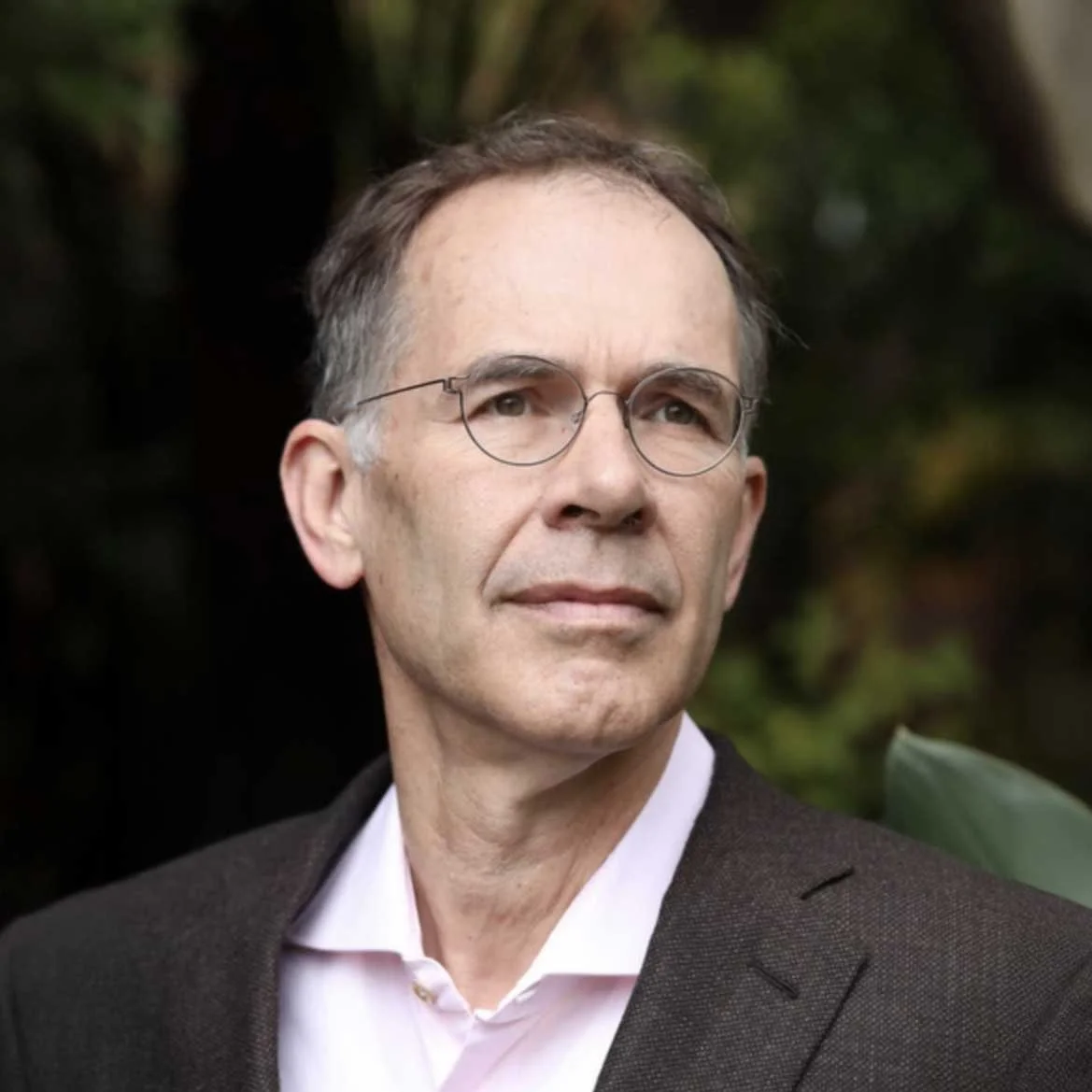
Professor Guido Imbens
Nobel laureate in Economic Science, & Applied Econometrics Professor at the Stanford Graduate School of Business and Professor of Economics in the Economics Department at Stanford University, ADIA Lab Advisory Board member
Image credit: "Diatom Plate 148." (from Atlas der Diatomaceenkunde) by A. Schmidt (1890). Courtesy of Public Domain Review.
Masters of Ceremonies

Saeed AlMarri
ADIA Lab Operations Board Member
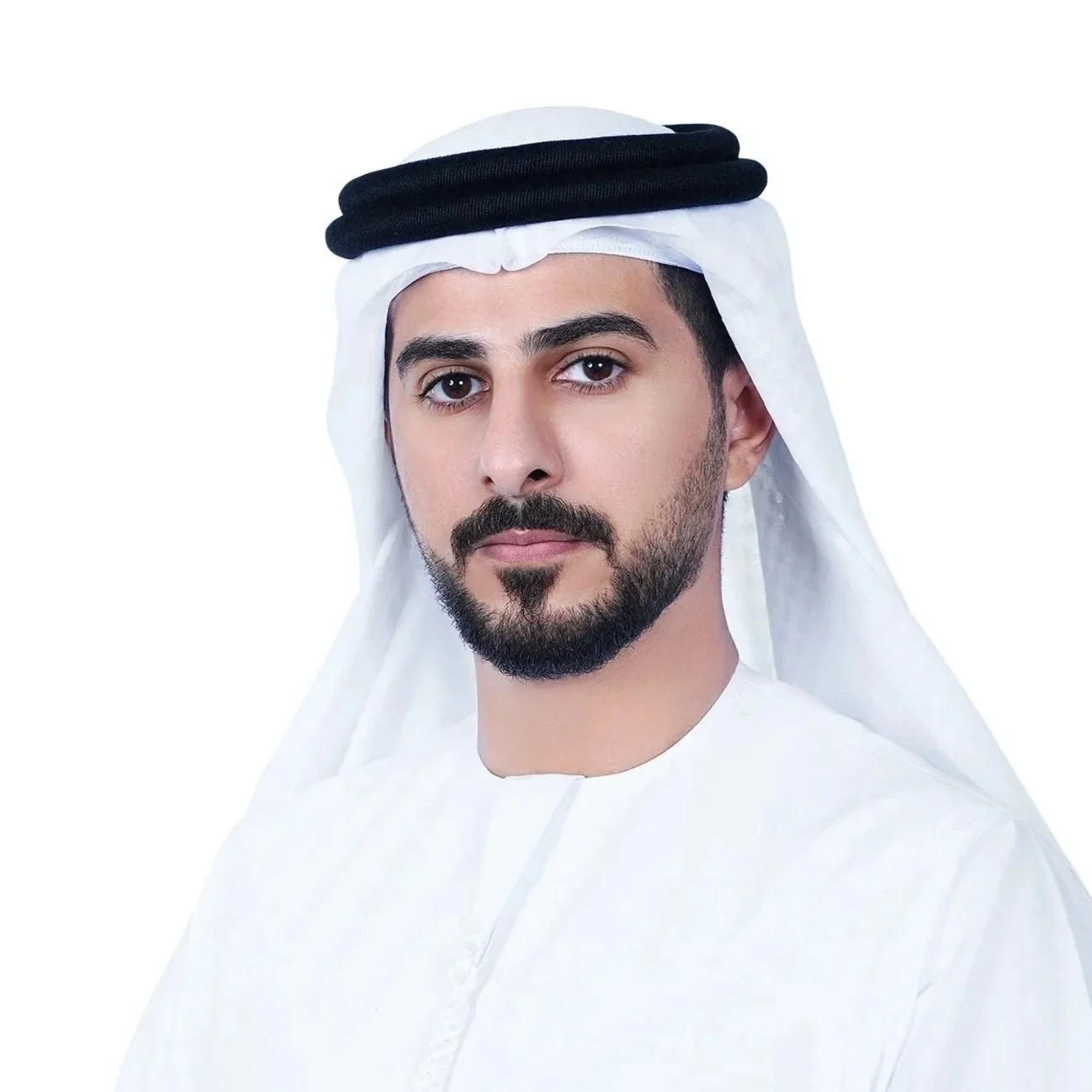
Hamdan AlAhbabi
ADIA Lab Operations Board Member
Biographies
David Krakauer
David's research explores the fundamental character of problem-solving matter. This is in contrast to the ordinary and abiotic matter of the universe. This research spans the origin of life and the evolution of intelligence and stupidity on earth, to include processes of "exbodiment" through which intelligence is enhanced and outsourced, using languages and artifacts. The details of this research include studying the evolution of cellular, linguistic, social, and cultural mechanisms supporting communication, memory, and a panoply of information-processing systems. He is also interested in the history of complexity and the way in which language games, rule systems, and paradigms help us to understand systems of knowledge.
David's research centers around a series of fundamental questions. These questions are all pursued using a combination of carefully selected model systems and mathematical and computational frameworks.
1. How did life and intelligence evolve in the universe?
2. What is the relationship of evolved problem-solving to fundamental physical and biological laws, to include entropy production, the arrow of time, and natural selection?
3. How do collectives of adaptive agents generate novel ideas and come to predict and understand the worlds in which they live?
4. How do ideas evolve and how do they encode natural and cultural life?
5. What is the relationship of organic to inorganic, cultural, and institutional mechanisms of computation and representation?
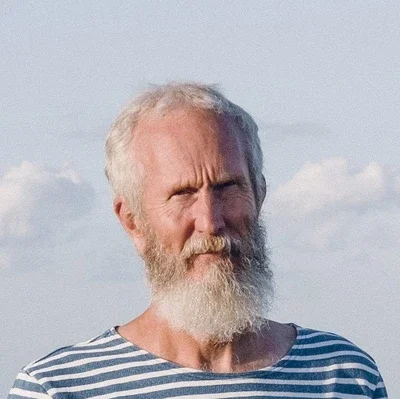
Doyne Farmer
J. Doyne Farmer is Director of Complexity Economics at the Institute for New Economic Thinking at the Oxford Martin School and is the Baillie Gifford Professor of Complex Systems Science at the University of Oxford’s Smith School of Enterprise and the Environment, as well as an External Professor at the Santa Fe Institute. His current research is in economics, including financial stability, sustainability, technological change, and economic simulation. Doyne is Chief Scientist at Macrocosm, his new Oxford spin-out company, which applies complexity economics to problems relating to climate change and the green energy transition.
He was a founder of Prediction Company, a quantitative automated trading firm that was sold to the United Bank of Switzerland in 2006. His past research spans complex systems, dynamical systems, time series analysis, and theoretical biology. He founded the Complex Systems Group at Los Alamos National Laboratory, and while a graduate student in the 1970s he built the first wearable digital computer, which was successfully used to predict the game of roulette.
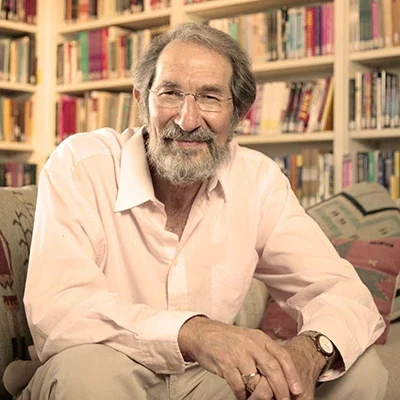
Geoffrey West
Geoffrey West is a theoretical physicist whose primary interests have been in fundamental questions in physics, especially those concerning the elementary particles, their interactions and cosmological implications. West served as SFI President from July 2005 through July 2009. Prior to joining the Santa Fe Institute as a Distinguished Professor in 2003, he was the leader, and founder, of the high energy physics group at Los Alamos National Laboratory, where he is one of only approximately ten Senior Fellows.
His long-term fascination in general scaling phenomena evolved into a highly productive collaboration on the origin of universal scaling laws that pervade biology from the molecular genomic scale up through mitochondria and cells to whole organisms and ecosystems. This led to the development of realistic quantitative models for the structural and functional design of organisms based on underlying universal principles. This work, begun at the Institute, has received much attention in both the scientific and popular press, and provides a framework for quantitative understanding of problems ranging from fundamental issues in biology (such as cell size, growth, metabolic rate, DNA nucleotide substitution rates, and the structure and dynamics of ecosystems) to questions at the forefront of medical research (such as aging, sleep, and cancer). Among his current interests is the extension of these ideas to understand quantitatively the structure and dynamics of social organizations, such as cities and corporations, including the relationships between economies of scale, growth, innovation and wealth creation and their implications for long-term survivability and sustainability.
He is a Fellow of the American Physical Society and was one of their Centenary Speakers in 2003. He has been a lecturer in many popular and distinguished scientist series worldwide, as well as at the World Economic Forum. Among recent honors he was a co-receiver of the Mercer Award from the Ecological Society of America, the Weldon Memorial Prize (2005), Oxford University and the Glenn Award for research on Aging and the APS Szilard Award (2013). In 2006 he was named one of Time magazine's "100 Most Influential People in the World" and his work selected as one of the breakthrough ideas of 2007 by the Harvard Business Review. He is the author of several books, a visiting Professor of Mathematics at Imperial College, London, and an associate fellow of the Said Business School at Oxford University.
West received his BA from Cambridge University in 1961 and his doctorate from Stanford University in 1966, where he returned in 1970 to become a member of the faculty. West is married to Jacqueline West, a psychologist in private practice; they have two children: Joshua, is an Assistant Professor in the Department of Earth Sciences at the University of Southern California and an Olympic silver-medalist. Devorah, is studying International Studies at Stanford.
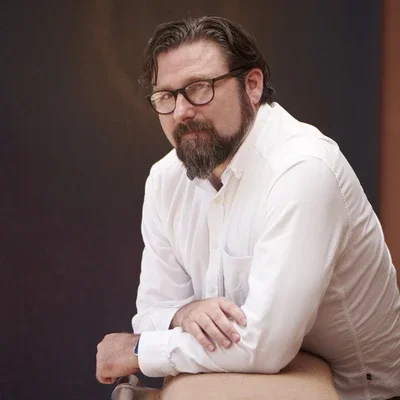
Will Tracy
As SFI’s Vice President for Applied Complexity, Will Tracy works to bring applicable insights from complexity science to the world of practice. He is deeply involved in developing blended communities of scholars, practitioners, and students.
Intellectually, Will is primarily interested in the role of institutions in moderating the epistemic impact of digital technologies. These interests drive his work as the PI of Project ARCH (projectARCH.org).
Prior to joining SFI, Will was a faculty member and undergraduate program director for the Lally School of Management at Rensselaer Polytechnic Institute. He is proficient in Mandarin Chinese and formerly served as the Associate Director of SFI’s CSSS-Beijing program. Will was at the World Bank before entering academia, where he focused on human developmental economics in Eastern Europe and Central Asia. He also has private sector and entrepreneurial experience in the US, China, and India. Will holds a Ph.D. in management with a certificate in human complex systems from UCLA and a B.A. (cum laude) in economics from Swarthmore College.
Saeed AlMarri
Saeed AlMarri is an investment professional at the Abu Dhabi Investment Authority (ADIA), an Operations Board Member at ADIA Lab, and a PhD candidate in Engineering Systems and Management at Khalifa University of Science and Technology. At ADIA, Saeed currently works within the Strategy and Planning function, where his work sits at the intersection of machine learning, data science, and long-term investment strategy. He previously held roles across ADIA’s External Equities and Internal Equities teams, gaining experience in manager selection, bottom-up equity analysis, and macro-driven portfolio positioning across global markets.
At ADIA Lab, Saeed contributes to operational efficiency, technology advancement and integration, talent engagement, financial planning and budgeting, and the design and execution of flagship Lab activities. His role focuses on translating advanced research, emerging technologies, and external collaborations into scalable programs that strengthen the Lab’s operational excellence and strategic impact.
Intellectually, Saeed’s work focuses on complex adaptive systems, explainable artificial intelligence, and the behavior of large language models in high-stakes decision environments. His research explores how LLMs reason relative to classical machine learning models, and how complexity-aware and agent-based approaches can improve transparency, robustness, and institutional trust in AI-driven decision systems. He has conducted immersive research and training in complexity science at the Santa Fe Institute, including the Complex Systems Summer School and advanced research programs in agent-based modeling and computational social science, bridging complexity theory, AI, economics, and real-world institutional decision-making.
Hamdan AlAhbabi
Hamdan AlAhbabi is an Associate at the Abu Dhabi Investment Authority (ADIA), an Operations Board Member at ADIA Lab, and a PhD candidate in Engineering Systems and Management at Khalifa University. He holds a Master’s degree in Computational Data Science from Khalifa University and a double Bachelor’s degree in Finance and Economics from the University of Iowa, and he is a CFA Program Level II candidate.
Intellectually, Hamdan’s research focuses on multimodal methods for financial analysis, exploring how combining signals across text, audio, and structured financial data can improve model robustness, interpretability, and decision quality. He is also interested in complexity science and complex adaptive systems, particularly how interconnected dynamics, feedback loops, and emergent behavior shape markets and institutional outcomes under uncertainty.