
ADIA Lab Summer School: Responsible AI in the Generative and Agentic AI Era,
in collaboration with the University of Granada, Spain
Agenda
Week 1
Monday, May 4
9:00
Registration
9:30 – 11:00
Welcome & Introduction to Responsible AI in the Generative and Agentic AI Era
Francisco Herrera, University of Granada

Abstract
Abstract coming soon.
11:00 – 11:30
Coffee Break
11:30 – 13:00
From Generative AI to Agentic AI and Beyond
Johannes Schneider, University of Liechtenstein

Abstract
In this talk we discuss how early GenAI models (like ChatGPT 3.5) were extended into modern agentic AI systems capable of planning, self-evaluation, tool use, and leveraging memory and feedback in dynamic environments. We highlight key characteristics of Agentic AI, limitations of GenAI, and how agentic approaches address them. To this end, we cover both foundations and practical system patterns that are increasingly entering industry at scale to execute complex workflows in multi-agent configurations. Furthermore, we will briefly extrapolate existing trends to discuss possible futures and broader implications for society.
13:00 – 14:00
Lunch
14:00 – 15:00
Technical and Conceptual Introduction to Agentic and Generative AI
Josef Teichmann & Bastian Bergmann, ETH Zurich


15:00 – 15:30
Coffee Break
15:30 – 16:30
Applied Agentic and Generative AI
Josef Teichmann & Bastian Bergmann, ETH Zurich
16:30 – 17:30
Introduction to Student Projects & Problem Assignments
Tuesday, May 5
9:30 – 11:00
Agentic AI Platforms: A Practical View
Juan Luis Suárez, University of Granada
Abstract
Abstract coming soon.
11:00 – 11:30
Coffee Break
11:30 – 13:00
Explainability and Continual Learning in General-Purpose Artificial Intelligence: Neurosymbolic AI to the Rescue
Natalia Díaz Rodríguez, University of Granada

Abstract
Recent general purpose AI systems have shown groundbreaking performance on a wide range of tasks. However, these systems can make errors, be biased, or act harmfully in certain contexts. New approaches are needed which can complement existing approaches while addressing the safety aspects. Neurosymbolic AI is a novel paradigm that offers methods that are able to learn from data but remain transparent and controllable. This is achieved by combining data-driven approaches with knowledge-driven approaches. I will discuss several challenges to attain explainability and the ability of foundational models to learn continually, and how neurosymbolic AI can help.
13:00 – 14:00
Lunch
14:00 – 14:45
Efficient Fair Regression via Wasserstein Barycenters and Normalizing Flows
Patrick Cheridito, ETH Zurich (FinsureTech Hub)

Abstract
In many real-world applications, ensuring that predictive models do not discriminate against certain population subgroups is a critical requirement. After discussing the theoretical links between fair regression and Wasserstein barycenters, the talk introduces an efficient numerical method for fair regression using normalizing flows.
14:45 – 15:30
The Reasoning Stack: Transformers, LLMs, and Autonomous Agents
Francisco Herrera, University of Granada
Abstract
Abstract coming soon.
15:30 – 16:00
Coffee Break
16:00 – 17:30
Group Work
Wednesday, May 6
9:30 – 11:00
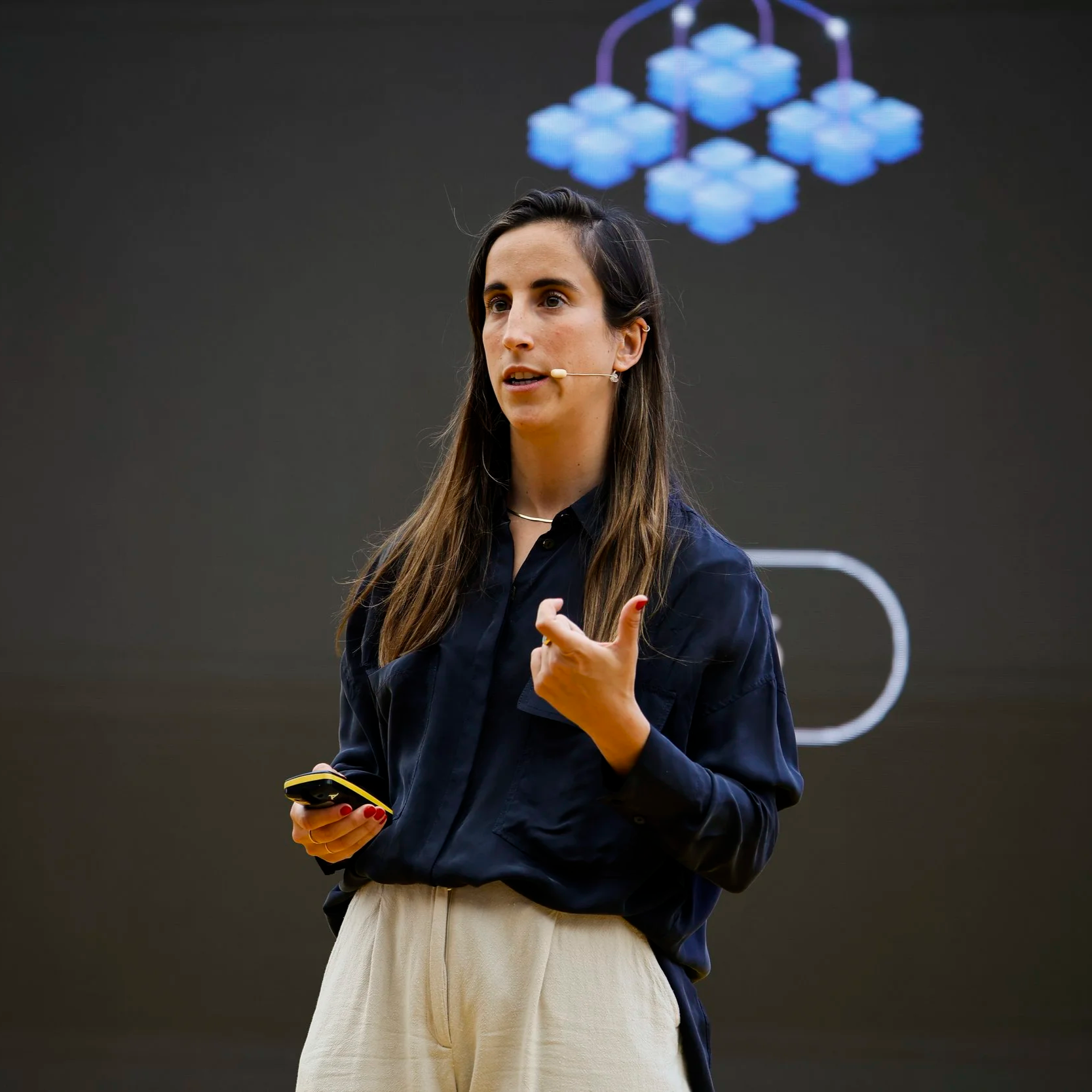
Google Cloud Agentic AI Platform
Julia Hernández, Google Cloud Spain
Abstract
A technical deep dive into building, orchestrating, and deploying production-ready AI agents in Google Cloud. This session explores the end-to-end capabilities of Vertex AI, the Agent Development Kit (ADK), Agent Engine and the Gemini model family. Attendees will learn how to architect multi-agent systems, equip agents with custom tools and memory, and securely scale enterprise agentic workflows from prototype to production.
11:00 – 11:30
Coffee Break
11:30 – 13:00
Building the Next Generation Connectivity Platform for AI Agents
Merouane Debbah, Khalifa University

Abstract
AI is evolving from standalone models into interconnected agents that perceive, reason, communicate, and act in real time. This shift calls for a new generation of connectivity platforms designed not only for humans and devices, but also for AI agents. In this talk, I will discuss how future communication systems must move beyond data transport to support coordination, distributed intelligence, and low-latency interaction at scale. I will highlight the role of AI-native networks in enabling seamless integration of communication, computation, and learning across edge, cloud, and physical environments. The broader message is that next-generation connectivity will be a foundational platform for intelligent agents to collaborate and operate effectively.
13:00 – 14:00
Lunch
14:00 – 15:30
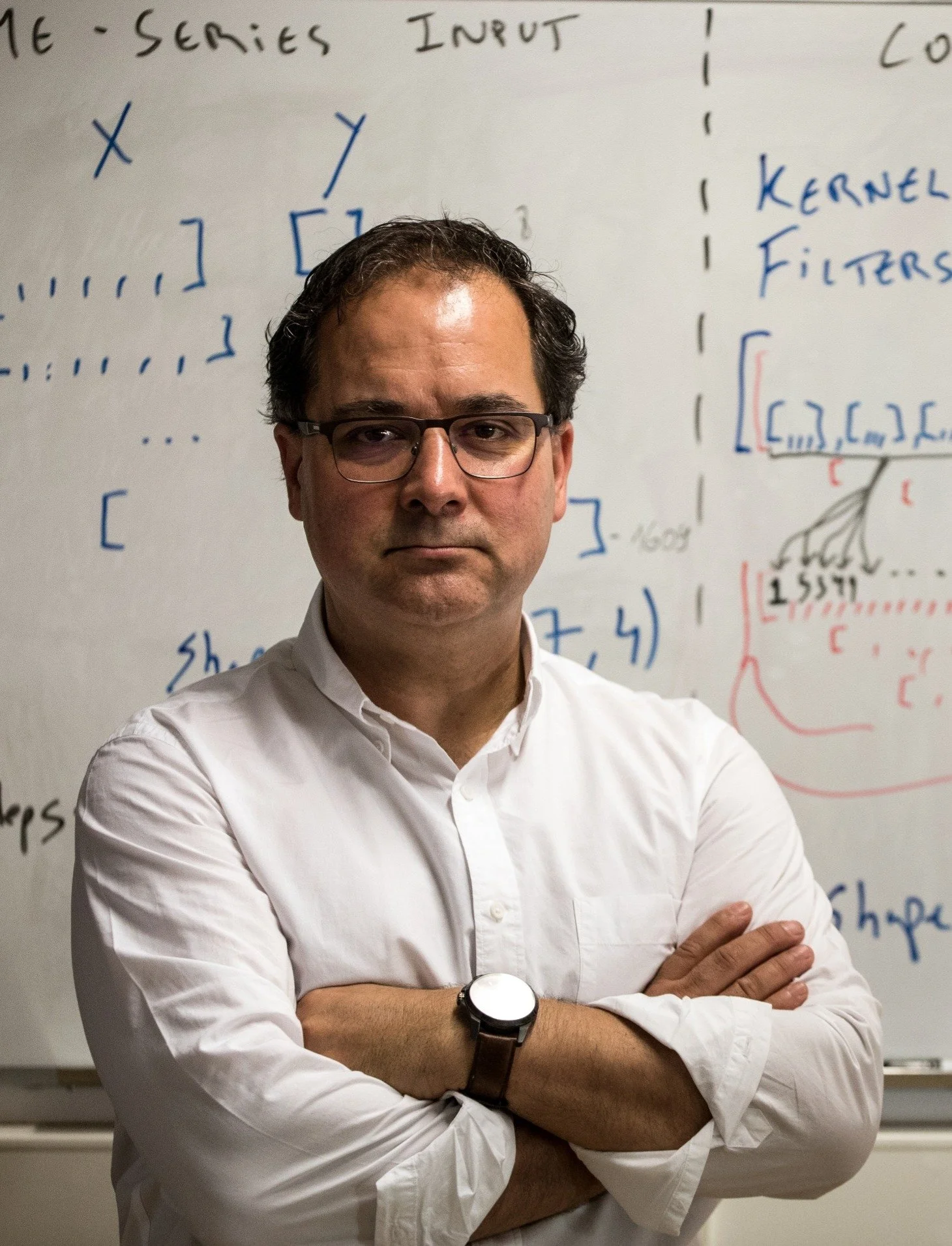
Agentic AI in Action: Multi-Agent Systems, Reinforcement Learning and LLMs for Autonomous Decisions
Paulo Novais, Universidade do Minho
Abstract
This talk outlines the central vision of the Architectures for Agentic AI project, which proposes a unified framework combining multi-agent systems, reinforcement learning, and large language models to support the development of autonomous, adaptable, and interpretable systems. This work argues for a transition from isolated AI components to structured and governable cognitive ecosystems capable of sustaining coherent and responsible behaviour over extended temporal scales. Rather than merely aggregating heterogeneous techniques, the proposed framework provides an architectural model for organising intelligence within autonomous systems. It advances both technical and conceptual contributions: a clear blueprint for system design and coordination, and an accompanying set of governance and ethical guidelines intended to ensure reliability, accountability, and alignment. The architecture is conceived to be domain-agnostic while preserving theoretical rigour, thereby enabling its application across diverse socio-technical contexts.
15:30 – 16:00
Coffee Break
16:00 – 17:30
Group Work
Thursday, May 7
9:30 – 11:00
Opening the Black Box: Understanding and Dissecting Foundation Vision Models
Concetto Spampinato, University of Catania

Abstract
Foundation vision models have reshaped computer vision through large-scale pretraining and transformer-based architectures, achieving strong generalization across tasks. Yet, their internal mechanisms remain largely opaque. This lecture first introduces the principles behind modern foundation models in vision, including transformer architectures, large-scale pretraining, and representation dynamics. It then focuses on recent approaches to explainability and model dissection that operate in a black-box or minimally invasive setting, avoiding traditional gradient-based optimization or model retraining. We will discuss local and global explanation methods, object-level causal interventions and black-box dissection methods that uncover functional components within deep networks. The session aims to provide methodological tools to analyze and structurally understand foundation vision models beyond standard attribution techniques and with unconventional techniques.
11:00 – 11:30
Coffee Break
11:30 – 13:00
Reasoning and Sparsity in Large Language Models
Torsten Hoefler, ETH Zurich
Abstract
The growing energy and performance costs of deep learning have driven the community to reduce the size of neural networks by selectively pruning components. Similarly to their biological counterparts, sparse networks generalize just as well, if not better than, the original dense networks. Sparsity can reduce the memory footprint of regular networks to fit mobile devices, as well as shorten training time for ever growing networks. In this talk, we survey prior work on sparsity in deep learning and provide an extensive tutorial of sparsification for both inference and training. We describe approaches to remove and add elements of neural networks, different training strategies to achieve model sparsity, and mechanisms to exploit sparsity in practice. Our work distills ideas from more than 300 research papers and provides guidance to practitioners who wish to utilize sparsity today, as well as to researchers whose goal is to push the frontier forward. We include the necessary background on mathematical methods in sparsification, describe phenomena such as early structure adaptation, the intricate relations between sparsity and the training process, and show techniques for achieving acceleration on real hardware. We also define a metric of pruned parameter efficiency that could serve as a baseline for comparison of different sparse networks. We close by speculating on how sparsity can improve future workloads and outline major open problems in the field.
13:00 – 14:00
Lunch
14:00 – 15:30
Data Competition
Jean Herelle
Abstract
Abstract coming soon.
15:30 – 16:00
Coffee Break
16:00 – 16:45
The Problems Arising From the Lack of Explainability in AI Governance: The RisCanvi Use Case
Oier Mentxaka, University of Granada

Abstract
In Catalonia, the RisCanvi case has become a highly representative example of how AI can be integrated into high-impact decisions within the criminal justice system. RisCanvi is a risk assessment system that helps guide decisions on imprisonment, parole and rehabilitation processes. While its early versions relied on criteria defined by experts and a more interpretable scoring scheme, in 2019 it made the leap to a statistical model (logistic regression) deployed within the prison administration’s digital infrastructure. This transition improved the predictive approach but reduced practical transparency about which variables are used and how they influence the outcome, making it difficult for professionals and affected individuals to understand, monitor and challenge the system. The session will use RisCanvi as a case study to show how a lack of explainability can translate into governance failures in high-risk systems and will present a layered intelligibility approach that combines technical explainability, user-centred design and communication tailored to different actors, in line with Trustworthy AI, the AI Act and ISO/IEC 42001.
16:45 – 17:45
Group Work
Friday, May 8 – Sunday, May 10: IEEE Conference
Week 2
Monday, May 11
9:30 – 11:00
Why Do We Need Regulation for AI?
Carme Artigas, Harvard University

Abstract
Abstract coming soon.
11:00 – 11:30
Coffee Break
11:30 – 13:00
Causal AI: The Missing Link Between General-Purpose Intelligence and Agency
Marcos Lopez de Prado, ADIA & ADIA Lab

Abstract
Numerous industrial tasks can be viewed as complex data science problems that could be automated through agents. However, general-purpose AI approaches often fall short in industrial practice. A case in point is investing: the allocation of financial resources under uncertainty. This seminar explores the key reasons why various mathematical and AI-driven methods fail in the context of investing, and it offers insights into how these challenges can be mitigated.
13:00 – 14:00
Lunch
14:00 – 15:30
Generative AI: A Human-Centric, Science for Policy Perspective
Emilia Gomez, Joint Research Centre, European Commission

Abstract
The session will examine the rapid emergence of generative AI (GenAI) from a human-centric, science for policy perspective, with a specific emphasis on the European Union. The session will first summarize the policy-relevant, technological aspects of GenAI, detailing their current capabilities and outlining emerging trends. It will then focus on the societal impact of GenAI, including both the opportunities and the risks. Considering these challenges, the session will then present ways to promote trustworthy and transparent GenAI practices.
15:30 – 16:00
Coffee Break
16:00 – 17:30
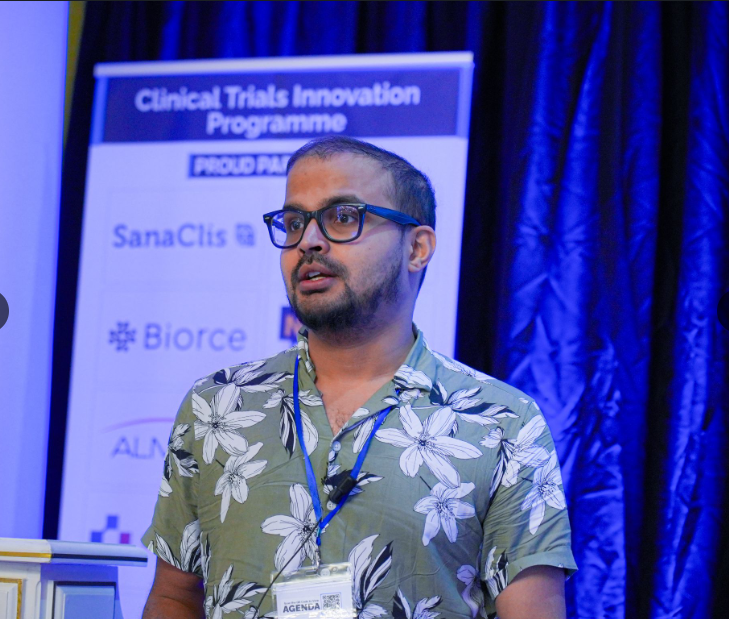
The Emerging Discourse on Responsible AI in Healthcare and Pharmaceutical Drug Development: Technical, Policy, and Societal Interventions
Arijit Patra, UCB
Abstract
As artificial intelligence transforms drug discovery, clinical trials, and healthcare delivery, urgent questions arise about safety, equity, and governance. This talk will explore how technical advancements, like generative models for molecular design and AI-driven diagnostics, intersect with policy frameworks (e.g., FDA/EMA guidelines) and societal needs, including equitable access and patient trust. We will examine key interventions: explainable AI for transparency, federated learning for data sovereignty, and regulatory sandboxes to balance innovation with risk. The discussion will highlight case studies, from AI-designed drugs in trials to algorithmic biases in diagnostics, to reveal opportunities and pitfalls. We will, as an exercise, deliberate and debate on the strategies for integrating scientific rigor, ethical governance, and public engagement to shape AI’s role in the future of medicine and ensuring it serves global health.
Tuesday, May 12
9:30 – 11:00
LLM and Agentic AI: Secure, Private, Open and Trustworthy
Nils Lukas, MBZUAI
Abstract
Abstract coming soon.
11:00 – 11:30
Coffee Break
11:30 – 13:00
Agentic and Generative AI for Sustainability
Luis Seco, University of Toronto
Abstract
Abstract coming soon.
13:00 – 14:00
Lunch
14:00 – 15:30
Group Work
15:30 – 16:00
Coffee Break
16:00 – 17:30
Group Work
Wednesday, May 13
9:30 – 11:00
AI in Healthcare: Hype vs Reality in the Integration of AI in Clinical Workflows
Rajat Mani Thomas, Weill Cornell Medicine Qatar

Abstract
Abstract coming soon.
11:00 – 11:30
Coffee Break
11:30 – 13:00
Engineering Safer Care: A Systems Thinking Approach to AI-Driven Transformation
Mecit Can Emre Simsekler, Khalifa University

Abstract
This talk explores how a systems thinking approach can support the safe and effective adoption of AI in healthcare. While AI has strong potential to improve patient safety, decision-making, and efficiency, it also introduces new risks, such as algorithmic and automation bias, that must be proactively managed. The session highlights key principles of Safe AI, focusing on governance, risk management, and human-AI collaboration.
The presentation will include a short interactive brainstorming exercise to help the audience explore how systems approaches can be applied in healthcare context. Participants will learn how these approaches can better capture user needs and requirements, refine problem definitions, and ultimately support more useful and safer AI deployment.
By the end of the session, attendees will gain practical insights into designing human-centered, system-aware AI solutions that improve both safety and performance.
The presentation will include a short interactive brainstorming exercise to help the audience explore how systems approaches can be applied in healthcare context. Participants will learn how these approaches can better capture user needs and requirements, refine problem definitions, and ultimately support more useful and safer AI deployment.
By the end of the session, attendees will gain practical insights into designing human-centered, system-aware AI solutions that improve both safety and performance.
13:00 – 14:00
Lunch
14:00 – 15:30
Low-Code and AI to Speed Up Software Development with the BESSER Platform
Aaron Conrardy, Luxembourg Institute of Science and Technology (LIST)

Abstract
In this talk, we will discuss how we tame the complexity of software development at LIST by using a low-code approach. By specifying the blueprints of the software to be built, we can (semi)automate its development, including its AI features and components (agents, neural networks, etc.). We will illustrate this approach with BESSER, our own open-source low-code platform for building all types of hybrid systems (e.g. a complete web application integrating an agent). BESSER also embraces vibe modeling, where AI is used to partially generate and refine specifications from natural-language descriptions, further democratizing software development. Following a demonstration of BESSER, participants will be invited to try out BESSER for themselves.
15:30 – 16:00
Coffee Break
16:00 – 17:30
Group Work
Thursday, May 14
9:30 – 13:00
Student Presentations
13:00
Certificates, Final Photo & Farewell Lunch
Coming Soon